A Repost from the early days of The Folk Life Magazine:
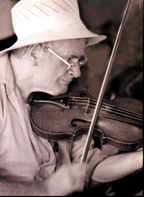
A Conversation with Eugene O'Donnell
Reprinted from The Folk Life, Vol.. 1, No. 2
December, 1976
(The Commodore Barry Club - or, as it's more commonly known, the Irish Centre - at the corner of Carpenter Lane and Emlen Street in Philadelphia's Mt. Airy section is the major source for traditional ceilidh music and dancing in the Philadelphia area. It is also the home-away-from-home for a host of Irish emigrants, who keep in touch with their families and friends back home through the various "societies," arranged by counties, around which the Irish Centre is organized. In recent years, the crowd at its ceilidhs has been enlarged by a number of younger non-Irish Americans, fascinated by the intricacies of Irish step-dancing and the appeal of its music, alternately twinkling and mournful. Nowhere is this complicated blend of gaiety and sorrow, technical dexterity and intuitive empathy for other human beings, better personified than in one of the Irish Centre's leading lights, Eugene O'Donnell. The influx of "foreigners" has been treated as a mixed blessing by some of the other, older members of the Irish Centre; but as six times all-Irish step-dancing champion and an acknowledged master fiddler, Eugene's warm welcome to newcomers has helped ease their path and set an example for his fellow Irishmen that has made the Irish Centre truly a fine place to go on a Friday night. in Philadelphia.
We first met Eugene some years ago when some of these non-Irish musicians invited us to come along with them and meet this Irish Peter Pan. But despite the prematurely white hair that belies his forty-three years, he can still display the form that won him his step-dancing championships when the spirit moves him or you tickle his fancy the right way. As we've said elsewhere, he is a touchstone fiddler for musicians as varied as John Hartford and Jean Carignan, David Bromberg and Roger Sprung. He was also, as we discovered in the course of this conversation, quite a soccer player in his youth - but we'll let Eugene O'Donnell do his own talking for a while. We think you'll find him as entertaining a friend as we do).
John: How long have you been going down to the Irish Centre, then?
Eugene: Oh, ever since it first opened, and that was...1958, I think.
John: Oh? I knew a lady in the La Salle bookstore, and she said that when she was a little kid they used to have a social centre there. So maybe it existed in another guise before that, was that it?
Eugene: Oh yes - it used to be the Ross House - it was the place to eat at one time, it seems. The elite from Chestnut Hill used to go there. Before that it was called the Canoe Club, I think.
John: So it wasn't an Irish Centre all along?
Eugene: No. But then the Irish societies got together and bought it, back in 1958. Most of the money was Irish society money - Mayo, Donegal, Derry and so on.
John: So at that time was there much music in the club?
Eugene: No, not at first. See, back then, up until that time, the different Irish society balls were all held in the Broadwood Hotel.
John: So they didn't have a regular continuing ceilidh thing:
Eugene: On no, not until it was open about six months or so. Then we started a ceilidh.
John: Was there a ceilidh band then?
Eugene: There was. John King, Eddy Cahill, Eamonn Hargan, Foley. A fellow called Tom Finnarty, who played the bass fiddle. A fireman from down there in Kensington, he was. Jerry Wallace used to play with us then. A damned good ceilidh band we had at that time.
John: Did they stay together long?
Eugene: Yes, As a matter of fact, we went up and competed at the feis in New York, against the other ceilidh bands in New York, and we won the cup. That would be in about 1965, something like that.
John: Was John Kelly around then?
Eugene: Oh, yes, but he wasn't playing with us at that time.
John: What about Barney McWilliams?
Eugene: Sure, him too. But he wasn't with out band then.
John: I thought they'd been around Philadelphia for a while, but not necessarily around the Irish Centre all that long. I know Barney was up in Canada for a while before.
Eugene: Well, I just met John through his son, as a matter of fact. I was going up to work, and I'd missed the train one day, so I was out on the road thumbing my way up to Ambler, and this guy gave me a lift, and he turned out to be John Kelly's son, Gene.
John: That's not a bad name. A dancer, I assume?
Eugene: Well, he asked me, you're from Ireland, and I said yes, and he said, my father's going back next week, going back to Sligo for the first time in I don't know how many years, and he's taking his fiddle with him. And I said Oh? And he said, aye, he is. And I says, you know, I says I play a wee bgit myself. And he says, well then you'll have to get together, you'll have to come over to the house. But in the meantime John had come back from his vacation and gone over to the Irish Centre, so I met him down there.
John: So he's from Sligo?
Eugene: Aye, that's right.
John: You know, a couple of years ago I was at the Philly Folk Festival, and there was this young fiddler, and we were talking, and somehow or other it came up in the conversation that you were a Derry fiddler, but this young chap himself preferred the Sligo fiddling. And I didn't know what the hell the difference was, so I asked Cathil McConnell about it. And he said, H'm, well, it's like this, Jayzus, it would take a long time to put the difference into words, you know. Would there be a difference that you could maybe describe?
Eugene: Yes, well, Derry fiddling is a Northern style of fiddling, it's very staccato, as opposed to the Western style of fiddling, Sligo, which is very much slower, legato, and they slur a lot of notes. Whereas in the North, Derry, Belfast, it has been said that their fiddling was influenced by Scott Skinner - I think I told you before, John, that John Doherty, who lives in Donegal, he told me that Scott Skinner was a frequent visitor to Donegal, and that his father had spent some time in Scotland, and that it was his father who'd influenced Scott Skinner, so - who do you believe? It all goes back and forth.
John: So would you say Aly Bain's fiddling was more like Derry fiddling or like Sligo?
Eugene: It's more like a Northern style - Northern fiddling and Scottish fiddling are all very much alike.
John: Would there be other regional styles that you could tell apart just by listening to them?
Eugene: Oh, yes. Claire fiddling is different again. And that's not all that many miles apart from Sligo, either, Clare isn't.
John: I know Mick Moloney was talking onetime about the dancing, and I know he thought the dancing in Clare was quite different from the dancing up in the North. But then he wasn't all that specific about it, either.
Eugene: Well, the dancing that Mick knows from Clare - well, the dancing we have up in the North is very competitive, you dance, you practive, you go to a festival to compete for a medal, a cup or whatever. And I think the dancing Mick was talking about would be more social.
John: Well, I know you did well in the competitions yourself. Six times all-Irish champion. Do you think that's a matter of personality - you like the competing?
Eugene: No, it was the way I was taught, the way I was brought up. You went to a dancing school. I think what Mick was talking about would be ceilidh dancing, there down in Clare they'd gather in different houses, just for fun. Whereas up in the North - well, it's like that all over Ireland now. But I can remember when the only people you'd see at the competitions would be from Belfast, Dublin, Cork. You never heard of anybody from the West if Ireland, coming over to the all-Ireland Championships. But now, they have a lot of dancing schools over in the West.
John: Is that a political thing, do you think? I was wondering if maybe Irish nationalism had stirred that up a bit more.
Eugene: Oh sure, probably in the North. It's just the thing to do, anything Irish.
John: I know over in Scotland the Gaelic Mod is catching on. Last year they even had it down in East Kilbride, outside Glasgow. My Uncle Arthur, who used to play the fiddle for fun when we were kids, when we were over last year was talking about the fact he's now in a group called "The Hundred Fiddlers," that's very Scottish Nationalism and all, and I was wondering if it's the same thing in Ireland.
Eugene: Well, that's right, anything Irish seeded the thing to do, and dancing seemed the easiest to do, so everyone did the Irish dancing, which was pretty much nationalistic.
John: You said it "seemed" the easiest.
Eugene: Well, it is. It is a lot easier to learn the dancing that it is to play the music, for a start.
John: How would you rank it - that's another thing Cathill brought up - he said that traditional singing was harder than playing the flute or fiddling.
Eugene: I don't know. I've never played the flute. and I don't know that Cathil's qualified to speak because he's never played the fiddle.
John: I don't know? But I do have the sense that his singing is related to his flute playing - there's a lot of slides and grace notes that sound like his flute playing to me.
Eugene: I think maybe it's harder for him to do it with the singing that it is with the flute.
John: Well, I don't know if he's trying to make any general claim for all Ireland, though he might be right at that. I want to come back to it later, because it's something I want to ask you about playing airs and how they're related to songs. But let me ask you if you think it's a good or a bad thing, the competitions that the kids enter.
Eugene: I think it's very good in one way, but then on the other hand, I think it's bad. Certainly it raises the standard of dancing in Ireland. But then on the other hand I've seen young dancers in New York competing for the championships, and if they win there they go over to Ireland to represent America. And their mothers and fathers were shouting at them, you shouldn't be doing this and that. So in that way I think it's bad.
John: I just wondered. That sounds like Little League baseball. But it seemed to me that competitions and dancing are two separate systems of values. You know, competing means winning and losing. Where dancing seems such a cooperative, social celebration to me, on the other hand.
Eugene: Well, of course, competitions they have at home are quite different from the way they have them here. Here, they have a judge, you go up on stage and the judge puts down a mark, and you have first, second, third prize winners and that's it. The judge is never asked to go up on stage and comment on the dancing or what kids do wrong.
John: Or show them?
Eugene: Aye, that's right! In Ireland, after the judge has finished the adjudicating, he's expected to get up on stage with the winners and tell them what he thinks they did right and what they did wrong, and from this criticism all the other kids learn too. And he shows them too!
John: Do you think it encourages or discourages beginners - I can see where if you win you'd reel great, but if you lose it would break your heart.
Eugene: Och, there's a lot of fun too, a lot of people getting up and they know they don't have a hope in hell of getting anything, you know.
John: Do you think having danced first helped with your fiddling?
Eugene: In what way?
John: Well, with tempos, with anticipating the dancers you play for?
Eugene: Yes, I think maybe being a dancer helps me in playing for dancers, because I know exactly what a dancer wants. If a dancer wants to slow up, I think a musician should be competent enough to slow up for the dancer. Not just - you see, it's the accepted thing that the fiddler sets the tempo and the dancer should be good enough to dance to any reel the fiddler sets. And to me, that's ridiculous. The fiddler is nothing more that an accompanist, and he should be able to play for whatever the dancer wants, for the dance. The point is not to go over board. But if the dancer wants to slow down in the middle of the dance, the fiddler should be able to do that. Of course, there's not too many around who can do that! See, if you're playing a reel for a did in the competitions, and they'll come to you and say, I want a medium reel, that doesn't mean anything. What's medium to you isn't to me. It's all relative. So you can't really set the pace. They should come out and tell me, I want the pace like this - dum, de-dum, de-dum, de-dum.
John: It would help if the dancers were fiddlers too, wouldn't it?
Eugene: Aye, well that's right. But the fiddler should be able to watch the dancer and see if the dancer is slowing down, then he should be able to follow the dancer. Take Teddy Schneider, who was John McCormack's accompanist. If John McCormack wanted to come out and sing "Macushla" at a rip-roaring pace, then Teddy Schneider should be able to go at that pace. And if John McCormack wanted to slow right down from rip-roaring along to adagio, then Teddy Schneider should be good enough to do that too. To follow him. He's the one performing, and Teddy Schneider is the accompanist. The same holds true, I think for fiddlers and dancers.
John: You don't take it then that when a kid enters a competition one of the things he has to do is dance at a strict tempo? That's one of the things he has to be judged for?
Eugene: I don't think so. You get 25 points for tempo, and rhythm. I think it should be just for rhythm. Holding a good rhythm.
John: I was wondering if judges in general agreed with you, or thought -
Eugene: I don't think the judges ever thought.
John: By definition? I was wondering if you'd get the kid in trouble, and if a lot of the dancers have been taught that they have to follow the fiddler.
Eugene: Well, a kid gets a chance to listen to the in introduction, which is only eight batrs, and the competitor is supposed to, in that eight bars, slow the musician down and speed him up. You'll see them doing it by a hand movement like this or like this. And it isn't really until they start dancing that they realize, so the musician has to take that into account. They have to get that in eight bars, and they're often not really experienced enough.
John: I've been listening to a lot of Irish music in the past four or five years, and I get the feeling a lot of young musicians have learnt it, not by playing for the dancing, but by listening to someone like, let's say, Barney McKenna of the Dubliners, playing in concert. And when he's doing that, playing the banjo like that, he's playing that thing just as fast as he bloody well can, and to hell with traditional dancing tempo.
Eugene: Well, that's right, to me a lot of that is just showing off.
John: Well, it seems to me that when I see young American kids learning Irish music at the Irish Centre, if they learn it upstairs in the sessions and don't learn it downstairs at the ceilidh, when they go downstairs to play afterwards there's going to be trouble for the dancers.
Eugene: Well, that is one trouble you get. Because nobody is going to go up to them and say, look, this is Irish dance music, cut it out now! That's what it is. Anybody can play diddley-diddley-diddley-diddley, but nobody can dance to it. I don't know. It's showing off. Jigs especially compared to reels, jigs are easy to play. A fiddler can really go to town. They play jigs at a spped you can't dance to.
John: Do they do that at home much?
Eugene: Not really.
John : I was wondering if maybe over here it's the influence of bluegrass music.
Eugene: I really don't know. It could be. But then now you go over to the other side of the scale and they play reels at such a slow pace that you can't dance comfortably to that either. But there's so many notes to a bar, and if there's 8 they'll try to shove in 16, with rolls and triplets and so on. So the reel sounds good, but you can't dance to it. So it's the same thing as the jigs, really. So a fellow called Pat Fahey from Bayou, New Jersey, some years ago asked John King and me if we would come up to New York and record Irish music for kids who were just learning to dance, strict tempo. And John and later on Jerry Wallace and I went up there and did that.
John: You've still done a lot of that recently, haven't you?
Eugene: I've done quite a few things for him. He has a lot of my fiddling down on tape. The idea was at one time to get me to play airs, not just Irish dance music, but airs also and to recite as well.
John: I wanted to ask you about airs.
Eugene: The airs are much more difficult to play, believe it or not.
John: I believe it. I've watched you do it.
Eugene: Well, that's true. Butt a lot of people, most people, might think that playing a fast jig or a reel was a lot more difficult. But it requires a lot more control to get an air right.
John: Control in the tone?
Eugene: Yes. And also you have to have a heart, as Jamie says.
John: Sure. The idea is that the real music is only partially in the fingers, it's more in the emotions, and the emotions come from somewhere else inside again.
Eugene: I think that's right. Heart is a good term for it. A lot of heart.
John: That's why I suppose a lot of younger musicians who might have the technical competence still don't have anything to play yet. I mean, The Irish Washerwomen is fun to play -
Eugene: Yeah, well, you know it's not very difficult to play that either. But when you start to play an air, for example, you have to have a good vibrato.
John: So even in technical terms, it's more difficult.
Eugene: Well, you should know how to play up in the positions. Not just in the first position., which is where you would find, would play the dance music. But to play an air, you have to be able to jump around on the instrument.
John: So even in the technical sense -
Eugene: That's right, even technically.
John: I think it was Seamus Ennis who said that before y ou even try to sing a song, you should know the story behind it, feel the emotions in it, and only then do you have the right to sing it.
Eugene: Well, the same thing would be true of airs. someone, and I can't remember who, said a violinist should never try to play Beethoven's violin concerto until they were at least 35 years old and had been in love a number of times. So you can't see any prodigy getting up there and playing Beethoven at ten years of age.
John: It's very interesting that there are any number of mathematical and musical prodigies, but very few literary prodigies. It's as if literature, being about human relationships, young prodigies who can follow the logic of mathematical and musical relationships, simply haven't had enough experience yet to follow the logic of relationships between people, maybe. They don't have anything to write about, until they've had something happen to them. And then, of course you have to survive the experience!
Eugene: Oh, I think that's true, myself.
John: Is there an especially rich tradition of airs in the North of Ireland?
Eugene: Not in Derry. In Donegal, I would say. By Jayzuz, yes! That one I've been playing now, Killian's Fairy Hill? I thought I knew just about every Northern air there was, and I just heard that last year when I was home. I can't remember who it was I heard on the record we heard, in Buncrana. Albert Ryan, was that it? I don't recall.
John: Why do you think that is, that there are more airs in Donegal? Do you think it's that they live long enough to think about their troubles - or just that they get into more troubles to write airs about?
Eugene: No, I think it's a sad part of the country. They don't have anything down there - that's where Breed comes from, and I'm kidding her, mind you, so watch it McLaughlin, all right? Oh you know, the people are inclined to be sad. Kind of sad, anyway, when you sit down and think about it. You look around you all you see is hunger and starvation everywhere, and you compose an air. All they have to eat is potatoes fried, anyway...Oh here, did you know that Bob Clarke wrote a bit on me, for the Irish paper here, the Donegal Bulletin?
John: Not to change the subject or anything, but what did you tell him you should have told me already?
Eugene: Well, maybe I should have mentioned that when I joined the Crofillis School of Dancing I was the white-haired wee boy there for a while, primarily for the fact that Crofillis and my brother were close.
John: And also for the fact that they were stealing away a champion Irish dancer to make a fiddler out of him.
Eugene: Och, well, I don't know. But it is true that at the school they did want to get involved with the guy who was teaching me the dancing, so they could put on a show, which eventually they did, with dancers and an orchestra and all. and anyway it wasn't so long after I got involved in the school of music that they put me in the position of what in this country would be the concertmaster or first chair of the three orchestras they had - the baby orchestra, for kids up to fourteen, the senior orchestra for up to eighteen and the regular one for up to age ninety.
John: Hey, Gene, tell me - what was it like, honestly, knowing there were grownups squabbling about who was going to put on you coat for you?
Eugene: Och, now, I didn't know anything about any of that! All I could think about was the next football match, myself!
John: Oh, did you play football - soccer then?
Eugene: Oh aye.
John: Were you any good at it?
Eugene: I played for Derry City - outside right.
John: I played left back, myself.
Eugene: For your school team?
John: For the Boys' Brigade company too.
Eugene: Aye, well I was playing for a professional team. I signed amateur forms for Derry City when I was 14, and then the next year I signed for Culrain. I got to play one game in the First Division. And I got one kick at the ball.
John: With a big crowd of people watching the game?
Eugene: Thousands of them. But the regular outside right was sick, and Italian fellow, and that was the way I got to play. But they kept the ball away from me. The word was, if you have to give it to the kid, OK, but keep it away from him if you can.
John: Did you want to stick with soccer, then?
Eugene: I really did.
John: Why didn't you then?
Eugene: My mother and father wouldn't sign the papers for me. That's the truth. Harry Davis, whose picture you see in the paper now and then, he's still involved in it, a scout for several English clubs, signing up young Derry players like me.
John: But your parents wouldn't let you join the circus. They didn't want you going off to England was that it?
Eugene: They didn't want me - they didn't think it was a good idea me signing for Derry City either, but Willie Ross, who was the manager at that time, explained to them that it was only an amateur form, you're only on the books for a year, it was. I wasn't going to be signed up for life or anything like that. So every Tuesday and Thursday I went over there to train with them, and then every Saturday there was the game. And then I was playing with these three orchestras at the same time.
John: Were you going to school at the same time?
Eugene: Oh, aye.
John: How were you doing in school?
Eugene: Bloody awful.
John: Why was that, do you think? Were you taking the technical course in school then?
Eugene: No, just the general course.
John: But you got into and served your time in drafting, didn't you?
Eugene: Aye. Architectural draftsmanship. Later on I went to Culrain and worked in an architectural drafting office there. They gave you half on the day off to go to classes, you see, and that was how I served my time then.
John: Well, that's not a bad trade to fall back on if you ever should lose your talent for the fiddling, is it?
Eugene: Oh, it's a good job, you know. But then there was all the traveling about on account of the all-Irish championships you were supposed to go to represent Ireland abroad.
John: Where did you go to?
Eugene: Well, I danced in a place in Glasgow called the Saint Andrews Hall -
John: I know the Saint Andrews Hall - I boxed there once when I was a kid, against a fellow called Bob Keddie that nobody was ever supposed to beat. That fair takes me back.
Eugene: Oh aye. And I remember too we were over at an Eistedfoddau in Wales, in Clangothlin.
John: You weren't down in London were you?
Eugene: In London? I was the first Irish dancer who ever danced on television in London. Jeez, this is funny. This was about thirty years ago - but now I'm giving my age away.
John: You were about ten? Excuse me - about twelve?
Eugene: We went to London, and my teacher's brother was working there. And we went to the BBC first, and then we got into this limousine, and we went to the Crystal Palace. And Brendan De Glynn - Brendan Glenn his name was in English - and they were watching this program, it was called, "In Town Tonight." And we had this manicurist? And this other girl came in, with the make-up? The lipstick and all that stuff? Wait till hou hear this! Kid, I'm talking about thirty years ago! And another girl came in, and she fixed your hair all up, you know. And then we went on the stage, and he played the piano, and I danced. And then we went home to his brother's house, and they were watching the telly. and we asked them all how it was. But all there was on the screen was a blob, a black and white blur. And I just couldn't figure out why you had to go through all that nonsense when all they got was this bloody black and white shadow on the screen!
John: Maybe they thought it would make you dance better if you looked all nice like that.
Eugene: Aye, well anyway, then we went on to France, and we danced down at Nice, of all places. The musician was one of the McCusker Brothers, from the McCusker Brothers Ceilidh Band. There were eleven brothers.
John: That's a ceilidh band itself right there.
Eugene: I think that was the general idea. And he played a little button accordion like that one Jamie just got for herself.
John: Oh that thing's really nice - have you seen it? A wee Hohner she found in the Salvation Army in Bloomsburg. Just great. But did you ever play any other instrument yourself, other than the fiddle?
Eugene: No, as a matter of fact I got a free scholarship on the piano at the Crofussis School of Music. First prize was tuition for as long as you lived, I think, and I happened to win that. the second prize was for five years tuition and this girl, Atlantica won it, but she got married real soon afterwards, which took care of that for her. And the third prize was for three years, but the girl who won that happened to die soon after. And so none of us got any of the piano, really. I lasted about three or four lessons myself and then I gave it up for the fiddle.
John: The reason I asked was that John Kelly and I were walking down to the Irish Centre one night, and I happened to mention that Tom Wilsbach was playing around with the Uilleann pipes, with the flute and the concertina, the tin whistle and so on, just picking up bits and pieces of them, enough to know what was involved, since he's really into ethnomusicology rather than into being a piper, a fiddler, or whatever. But John thought that was scandalous. He said he tho ught you could spend your whole life just on one instrument, exploring what it could do and so on. That sounded like a sort of idealistic thing to say, the kid of thing you might come out with for example. Or is that too narrow, or what?
Eugene: Well, it's too narrow for Tom Wilsbach, that's for sure! I don't know about anybody else. He can play them all bloody well, if I know Tom Wilsbach - he's a fine young musician.
John: Well, I was over at the Irish Centre on the Friday night of that big folklore convention a couple of weeks ago, down at the Ben Franklin. And Tom came in, and Tom Standeven was up. You know how Standeven is, with his Uilleann pipes and all. But he was really being so nice about it. What he did was he got Tom Wilsbach and young Timmy Britten out in the front hall, and he was showing them things on the pipes and on the flute. And he was saying, Now, I know this one should be played a lot faster than this, but here it is anyway, and he would walk it through for them. And then he would say, I really can't do that one, but here it is, and you'll probably get that one long before I ever do. I thought that was really nice of Standeven, myself. And Tom, of course, he was putting himself forward as just a learner.
Eugene: Aye, well, that's Wilsbach for you. That's on of the ways he's learning so much, he's willing not to be the bloody expert all the time. So he'll try something new, and he'll let you see that he's learning, and people do like that.
John: It's a nice attitude. It's sort of the same attitude with John Hartford, that night in your hotel room when you were showing him the jig steps.
Eugene: Oh, John! Jayzuz, yes! John couldn't learn - he could no more dance - well, a helluvah nice fellah, you know, but he'll never do Irish bloody dancing! Well, he wanted to learn right enough, and he stood there trying hard enough, trying like hell in fact, but he'll never be a dancer if he lives to be a hundred!
John: Well, Jayzus, you walked out the room and left him doing the steps there, with me sitting on the couch and neither of us knowing what the hell else to do, but he kept right on working at it until you came back in five minutes later and said that's very good John!
Eugene: Och, well he is a nice fellow, though, and what else can you say. But it is the same attitude you were talking about as Wilsbach, right enough. But did you know that before I came out here I took my TCRG exam - that's to license you to teach Irish dancing, and then when I came out I'd taught a few people here, so then they went up to New York, and I was talked into it by the adjudicators, who were here from Ireland, to take the adjudicators' exam too.
John: So you're licensed to teach and to judge the Irish dancing both?
Eugene: That's correct.
John: So how did John Hartford come to be in your room that night?
Eugene: I don't rightly recall. Wasn't it you who brought him round?
John: Me? Hell, no! I just me him that day - in fact, now I recall, it was that big session with Cronin and Gil Losier and Carignan and that girl from the Buffalo Gals and Pete Renzetti you were running behind the performers' tent that afternoon. And so he came to your room to get you to show him some steps for his dancing on stage when he fiddles.
Eugene: Och, that's right, now I remember it. So he did. And we'd played ourselves some Vivaldi that afternoon too, do you remember?
John: Right. That was a nice time. Was that the Philly festival you got conned into dancing on stage?
Eugene: I think that's right now. I was playing with what's-his-name, Bromberg, and I was dancing too.
John: Wasn't that the year you thought you'd wear denims like an American hippy?
Eugene: That's right! And you know, you can't even bend your leg in them things, let along dance!
John: Well, you know, Eugene, you're supposed to buy them five years old already.
Eugene: Aye, well nobody ever told me that. You couldn't even bend you leg in them! Well, after that I thought I'd wash them, you know. And somebody must have told me this one too, because I don't think I'd ever had had this idea on my own either. But I threw them in the washer, with a bottle of peroxide in with them. And they came out all white right across the front, you know. So I just threw them back in, with the rest of the bottle of bleach. And this time they came out pure white, but the whole zipper was rusted out, and it was all torn away. So I just threw them away then, and that was the last of me and denims, I'll tell you.
John: Well, what got me started on this was you saying that dancing's so easy -
Eugene: That's right, if you can walk rhythmically at all, you should be able to dance easy enough.
John: Oh, aye? Well, anyway, that tape I got off you once, of Dinny McLaughlin and his school of Irish music, with all of those all-Irish champions in it, I took that in to school once to let a couple of people hear it because I thought that was both an inspiration and a challenge to teachers. I said to someone that if Dinny could take kids like that, from a totally un-musical background like that, and produce all of those champions, that should challenge all of us. But one of my colleagues, Sreenvasa Rao, from India, he said - in that British accent of his, you know - "Yes, John, but you must realize that there is something intrinsically entertaining about Irish music and dance which may be absent when one is trying to teach students about the Great Vowel Shift or Grimm's Law..."
Eugene: Well, that's right! It's a helluvah lot more fun to learn an instrument, and it's a whole lot easier to learn to dance, than it is to sit down and learn a foreign language, let's say!
John: So now we know. Let me ask you something completely different. What's it been like playing with Mick Moloney - when did you meet him?
Eugene: Well, it must have been not too long after he came out here, about 1971 or 1972 I think, that I first met him. I met Mick - as a matter of fact, I think it was Stretch Pyott's idea that we get together and play a few tunes.
John: Always thinking, Stretch.
Eugene: Aye, well I think it was around the time that he opened his club over in where was it, Bridesburg, and I think maybe it was around that time that he suggested Mick and I get together. Well, it was him who introduced me to Bromberg you know too.
John: And you took one look at Moloney, and said, Jayzus God!
Eugene: Well, that's true. You know, I'd never heard of that group he played in over back home, the Johnstons. But you could tell at once. I mean, Mick's a professional.
John: And professionals never make mistakes, as you've told me - and as Moloney tells me, that's more of your bloody idealism.
Eugene: Well, any of his so-called mistakes are really just nothing but great variations on the tune that he's playing. They're not mistakes, they're variations.
John: Well, I think it's Roy Clark who says that if you make a mistake when you're playing the first thing you should do is go back and make the same mistake in the same place, so people will think you meant it the first time.
Eugene: Well, that's what you do in Irish dancing, after all! You do a step on the right foot, and then you do the same step on the left, 8 bars. And if you make a mistake, on the right foot, then you do the same mistake on the left, because that's what the judges are watching for, and if you're quick enough to do that it's not a mistake that way, see! See, the judge is watching to see the same thing on the left foot he's just seen you do on the right foot. So it cancels itself out, if that's what you do, so it's OK.
John: All you have to do is be quick enough, right? Good advice, that. But let me ask you, what's it been like, playing with Moloney?
Eugene: I've really enjoyed it, he's really a treat to play with. Och, he's so bloody good, you know? And I've also enjoyed playing with Jack Pedlow too. I hope we can have a few tunes together when he comes back over for Christmas. Because I really enjoy playing with Jack too, you know. I think he's a wee bit lonely in Belfast, you know.
John: So maybe he'll be composing you some airs out of that too, then.
Eugene: Aye. And I've particularly liked playing with John Krum, you know.
John: Isn't he turning into a great fiddler by now? I heard him with the Ballyhoo String Band, doing that.
Eugene: Aye, John's doing real fine with that. But of course he's more the guitar player than a fiddler, even so. I think he's a fantastic guitar player. He's certainly, as far as I'm concerned, a super accompanist, and that's bloody rare these days.
John: I noticed about yourself, when I did those readings and you accompanied me, I really had something I could lean on, and it really was great.
Eugene: Aye, well, to be an accompanist you have to be a really sympathetic person. It's one thing you notice, in classical music there's not too many good accompanist left any more. Teddy Schneider played for everybody, he was run off his feet playing for all these great artists. But they wanted the best, and that was what he was, he was top dog, really. There's great concert pianists, and there's great accompanists, and they're so rare, you know. John Krum's a great accompanist. He knows exactly what you need, and he goes right along with that, with what you're asking for. And that's a very difficult art to master, you know.
John: Wouldn't he be great for - well, let me ask you - how did you enjoy the Philly Folk Festival this year?
Eugene: Oh, it was busy enough, let me tell you!
John: What do you think of having all of the concert workshops and stages going on at the same time?
Eugene: Well, it's got its good points and its bad. I mean, what are you going to do if there's two things you want to be in on, and they're on at the same time? I mean, Jamie's going to want to be down at the Dulcimer Grove with that new dulcimer from Charlie Barnes this year, and what if there's questions she wants to ask down there, you know, what tuning do you like to use, what were you doing there with that bit and all that. I mean, a tape recording is probably the next best thing, but it's still not the same at all.
John: Well, it was the same with our "May in Bloom" festival, tiny as that was by comparison. I was upstairs with that New York jazz band, Monty Waters' people, and Bonny Yeager, and I missed all that stuff you got down stairs with John Krum's guitar and banjo workshop and all that. I mean Mike Gallagher and those guys, I heard them on the tape afterwards talking about all the banjo styles and techniques, but it wasn't the same as being there either.
Eugene: True, true! But then on the other hand, if you were to try to stretch it out to maybe a week, when could you do it? And it would probably be a financial disaster too.
John: And then there's the other thing, how people's energies get multiplied in a geometric fashion when they're all jammed in together doing a hundred different things at the same time, bouncing energies off one another. And then if you just don't happen to like what you see on the stage, there's always somewhere else where you can go where there's something you want to hear, let's say. It would be interesting to talk to Paula Ballan about the rationale for that I think. I mean, I see mostly the disadvantages, but the advantages are obvious too.
Eugene: Well, you do get to meet a lot of good people that way too. I mean, did I tell you how I first met Cathil McConnell that way? He was down there on that little wooden bridge from the Dulcimer Grove to Stage B, and playing on the tin whistle to beat the band. And I thought, Jesus, I never heard anybody get music out of a tin whistle like that in my life, and here's this little Jewish fellow doing it! And when he stopped, I told him so, and he says, so what part of the country are you from, in his Fermanagh accent. And I said, Holy Jayzus. And he says, well, here, get that fiddle there out of that box and we'll have a see tune. And so I did, but pretty soon they had to move us, because people were gathering around to listen to the two of us, and we were blocking the path through. And that's what happens there too, you see.
( At about this point the tape apparently ran out, though we didn't notice at the time. He's a helluvah talker, isn't he? )
To Buy Eugene O'Donnell's Recordings:
Mick Moloney with Eugene O'Donnell
Uncommon Bonds,
Slow Airs and Set Dances
and Foggy Dew
CLICK HERE
OR
http://www.amazon.com/exec/obidos/redirect?tag=johnmclaughlin
